Sleep Hygiene: A Foundation for Chronic Pain Recovery
Sleep is an active process that helps regulate the nervous system. For people living with chronic pain, sleep quality can strongly influence pain sensitivity, recovery, and resilience. When sleep is poor or fragmented, the brain becomes more vigilant, pain thresholds drop, and the nervous system has a harder time turning pain signals down.
Research shows that disturbed sleep is not just a consequence of pain but a driver of increased pain through changes in central pain processing, reduced descending inhibition, and heightened nervous system sensitivity. Improving sleep is therefore a key part of a mind–body approach to chronic pain management.
Why does poor sleep influence pain?
From a neuroscience perspective, sleep supports the brain’s ability interpret sensory input. When sleep is disrupted:
Pain sensitivity increases (hyperalgesia)
The brain’s natural pain-inhibiting systems become less effective
Emotional regulation and stress tolerance decrease
The nervous system remains in a more “threat-sensitive” state
Over time, this can contribute to central sensitization, where the nervous system amplifies pain even in the absence of ongoing tissue damage.
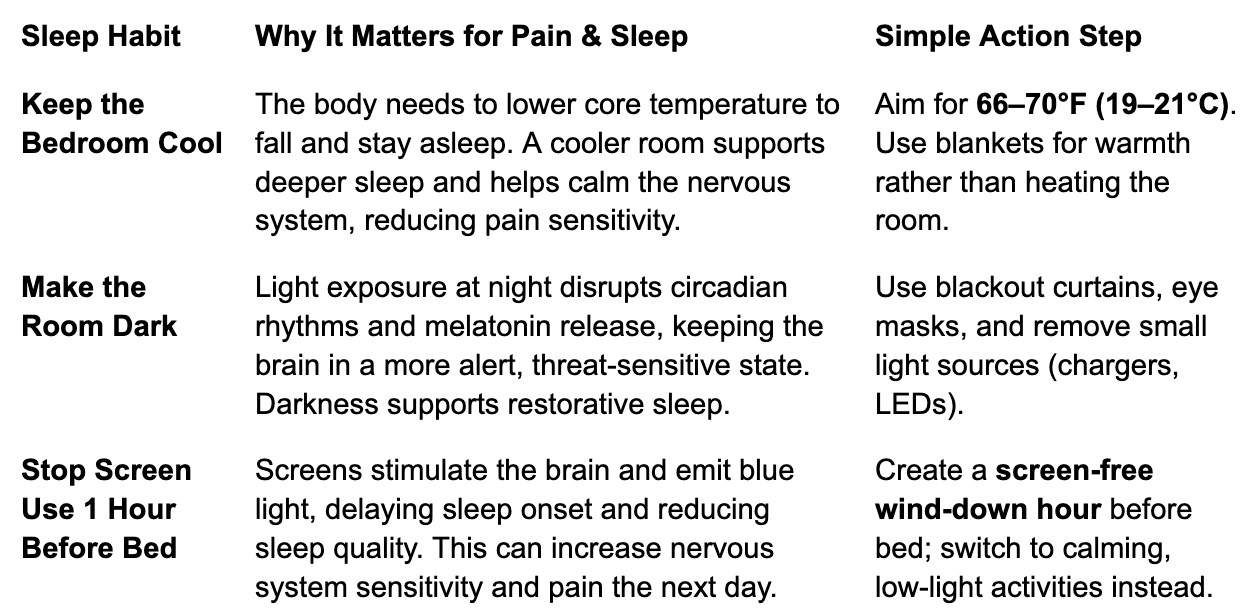
Here are some evidence-informed sleep hygiene strategies for chronic pain:
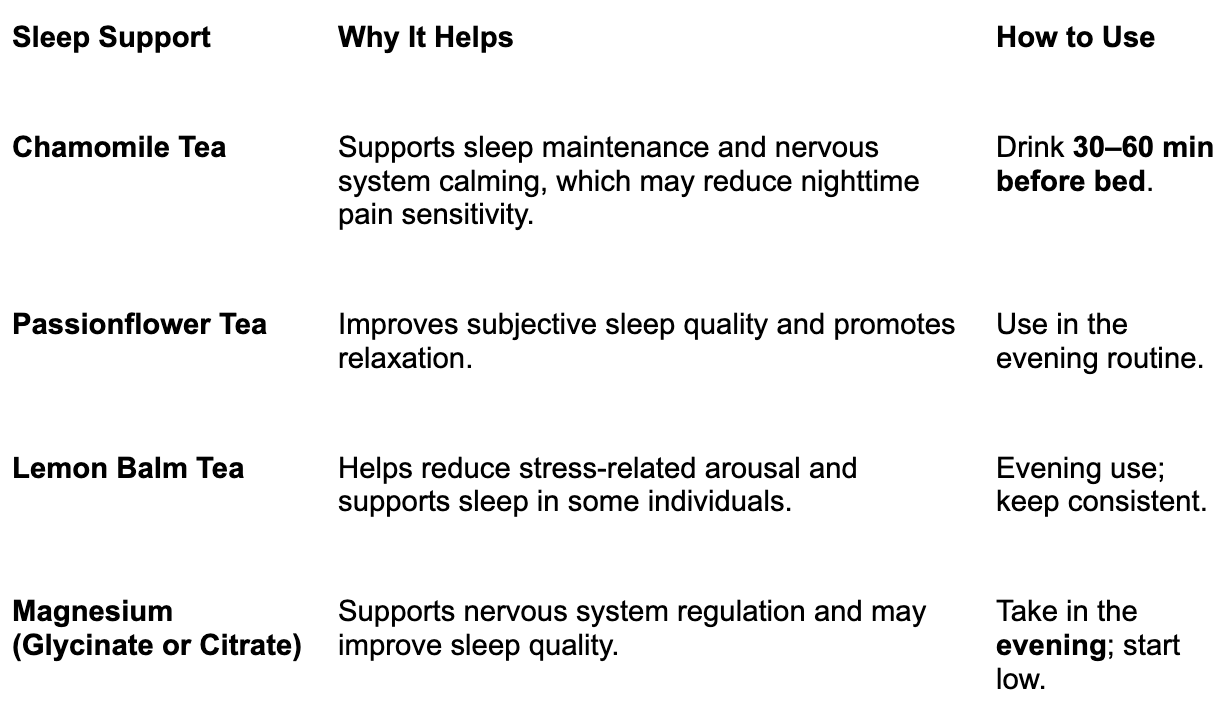
Here are some ideas for gentle support to promote relaxation and sleep:
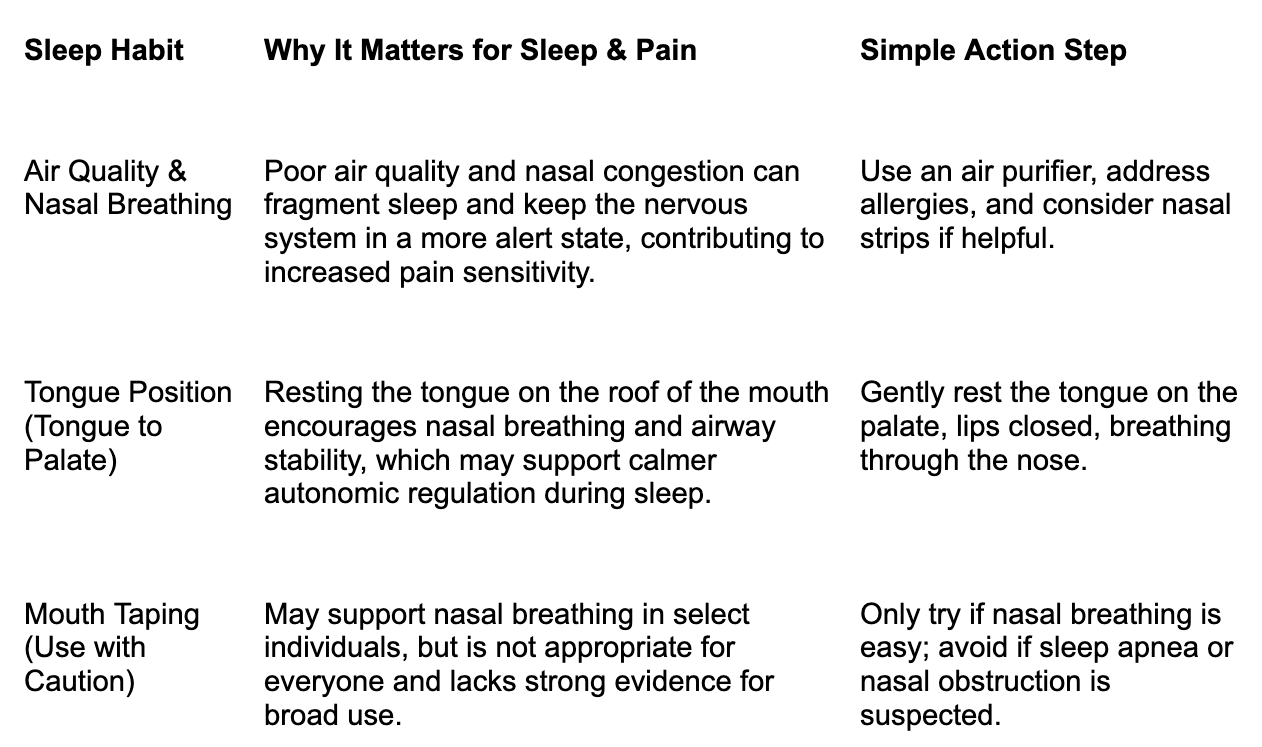
Here are tips for breathing and airway for improved sleep quality:
Sleep is one of the most powerful ways to calm a sensitized nervous system. Improving sleep is not about forcing rest, but about creating the conditions of safety that allow the brain and body to down-regulate. Small, consistent changes to sleep hygiene can have a meaningful impact on chronic pain over time!
Chronic pain is real, complex, and influenced by how the nervous system processes safety, stress, and rest. At Mind Body Physio, we help address chronic pain through education, movement, and strategies that support nervous system regulation, not just symptoms. In our office, we focus on evidence-informed, whole-person chronic pain management to help you build confidence, resilience, and meaningful change over time.
Ready to learn more? Click below!
